Quick thoughts on The Things We Never Say by Elizabeth Strout
(spoilers)

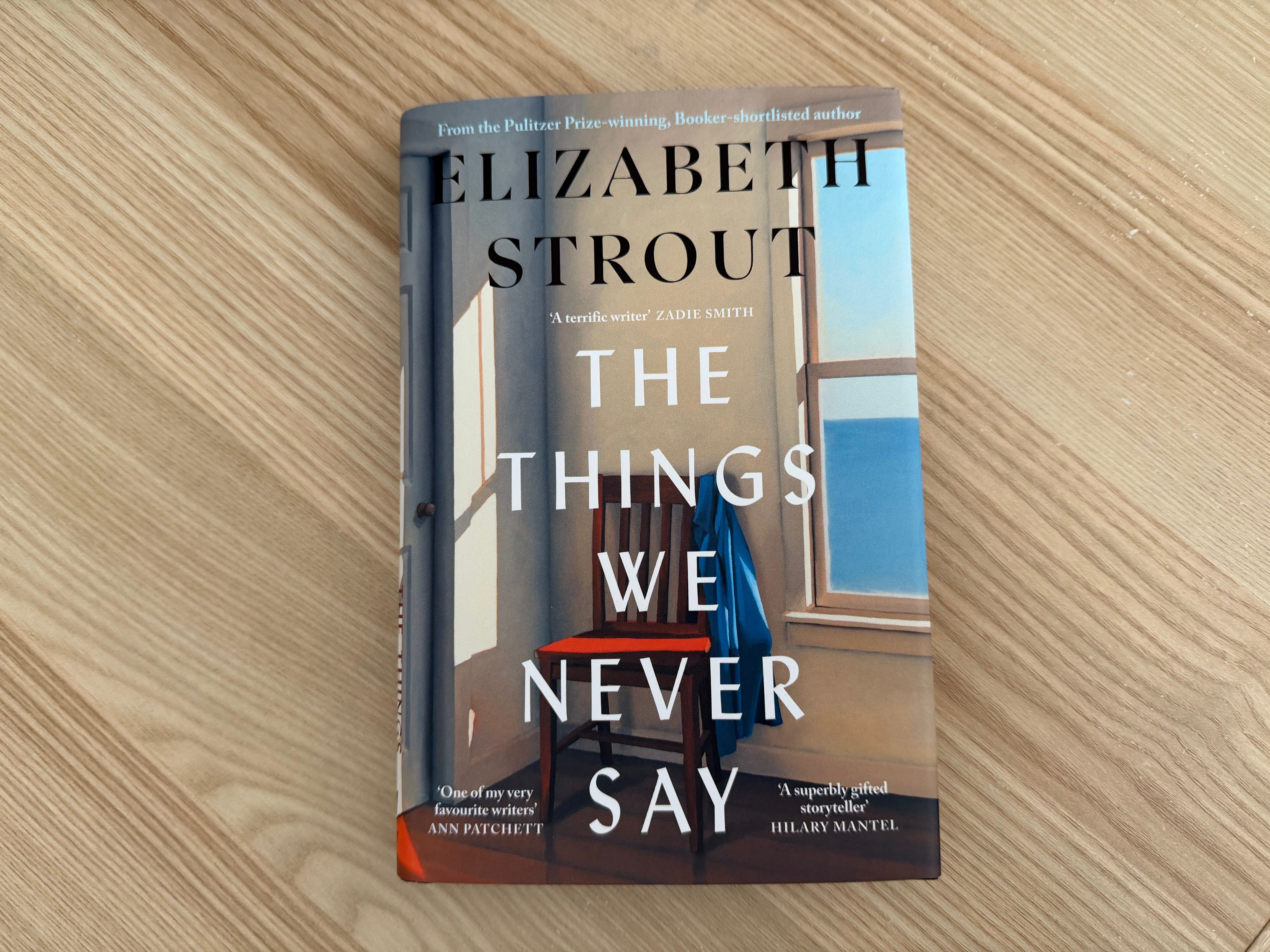
Before I resume full time study next week and shift my media diet to an interminable conveyor belt of hard news and the odd fluffy opinion piece about how to beat screen addiction, I made an effort to read some fiction to remind myself that I am a human with feeling, capable of working my empathy with imagination and creativity. To remind myself to care for others — but not by reading the analysis of the latest outrageous podcast appearance by an increasingly popular Australian politician, her enduring lack of charisma somehow doing nothing to quell her rise to serious power, then afterwards deciding, hey I should do the opposite of this!. No no no no. I have the ability to become someone else within the pages of a good book. I’m a little over the fact-sheet-to-empathy pipeline.
I was predisposed to love this book. Elizabeth Strout’s The Things We Never Say presents Artie, this man, his relationships, his life: the Everyday. After feasting on Karl Ove Knausgaard’s My Struggle series a few years ago (thank you Jeremy Strong), my hunger for quotidian literature has never abated. Yes, the stilted conversations Artie and Evie share before bed is the meat and bones, how they change each day, how each day’s happenings subtly alter the ways the characters relate to one another, slowly accumulating, the characters all of a sudden standing at opposite ends of the planet. I eat this shit up.
Strout’s mundane story necessitates a mundane style. The book’s biggest moments — Artie’s forthcoming death, for example — are laid out matter-of-factly, drawing no more attention than required, the reading experience never feeling voyeuristic. This big bad thing happened, that’s life, and then this good thing happened, and that’s life too. I appreciate the sporadic nature of the prose, mimicking the thoughts of a man lamenting eight hundred things at once.
The crazy good stuff
Following Artie we quickly learn his noble, timeless wish: to inspire his students the same way his teachers inspired him. In this I became swept up again and again, feeling a galvanising optimism rise within me, a desire to follow in Artie’s footsteps, to learn everything always and help others find what they’re meant for at all costs. As a (highly functional) pessimist myself, this is no small feat. And all the while — and this is glaringly, almost embarrassingly obvious as I flick back over the book — the grim core of Artie’s being is laid bare repeatedly for me to gawk at. I read Artie’s admission of suicidal ideation. I read Artie’s crippling anxieties about a world on the brink. I read Artie discovering a truly fucking destabilising secret. But I suffer a fondness-induced amnesia — because Artie’s love for his students is so, so bright. So bright it blinds me — and Artie. Here Strout unearths a depressing profundity: love conquers, but it masks, too. We are fed pages of Artie’s dismal prognosis for his country and planet, but one magnanimous hand on the shoulder of the petulant Danny Marino or his giving the overlooked Rhonda Lazzare the time of day, and I feel good. I forget. And it’s grotesque.
In the moment, the novel’s downer of an ending makes the stomach drop, though it shouldn't: Strout had been laying the groundwork for 200 pages. It’s her skill that makes the ending at once harrowing and supremely satisfying. Like a good novel does, The Things We Never Say throws you out to sea. All you’re left with are ideas; hopefully they float.
Strout posits two edicts on the nature of life and love. The first: love conquers all and tears our anxieties to shreds. The second: love is so powerful that in its brightest moments it may blind us to the innate horrors of being alive, and shortly thereafter we forget such horrors, only for them to rear their heads later, more potent and with malice.
Closing my sleeveless hardback I ponder the utility of love. If unrelenting love and hope for those around me leaves me blind to my own turmoil, is it worth it if it lights the flame of curiosity and altruism in another? Or could love have the healing properties we are so desperate for? Probably both.
Like I said, I was primed to enjoy my time here. There was of course the vicarious living through Artie that I experienced; he articulated worries that I share but lack the words to convey, and I derived immense comfort from their being so topical. (ChatGPT gets a solid mention towards the end.)
Strout’s ability to tease out such pathos from such a brisk novel is remarkable. In barely 200 pages she shows that, unavoidably, there will be space for all of it: pain, change, grudges, truth and lies, an indifferent world, a world with a future, and the chance for time to work its magic and bring people back to one another — even if some of us don’t last to see it.
The book left me totally unable to think about the footy game I’m about to head to (Pies v Blues, huge game). What a joy, what a privilege.
“My occupation is gone. Just like Othello. My occupation was my students, and now they are gone.”